

LaBriece Ochsner is a certified Comprehensive Pilates Teacher, Pilates Trainer, Pilates Continuing Education Instructor, International Pilates Speaker, and founder of LB Pilates & LB Guides Advanced Pilates Education. In her work, she supports people with different physical conditions and places particular emphasis on conscious, high-quality movement and teaching. In conversation with Gessica Paradiso from MEDiDOR, she explains what distinguishes Pilates as a method and why the structured movement concept can also be of interest for as a complementary approach.
Pilates is a structured training method and much more than a passing trend. It is a holistic exercise concept developed over a hundred years ago by Joseph H. Pilates, a native of Germany who emigrated to New York City in the 1920s. Joseph Pilates himself originally called his method Contrology and developed it on the basis of a clearly defined set of principles that differed significantly from other forms of training of his time – in particular through its focus on precision, control, and the integration of body and mind. Joseph Pilates understood movement not only as physical training, but also as a means of training perception, efficiency, and inner balance. According to his basic philosophy, Pilates should ideally be practiced regularly, in the best case daily, as a form of physical "maintenance." When applied consistently and consciously, the method aims to support general health and well-being, promote vitality, and contribute to long-term physical resilience and longevity.
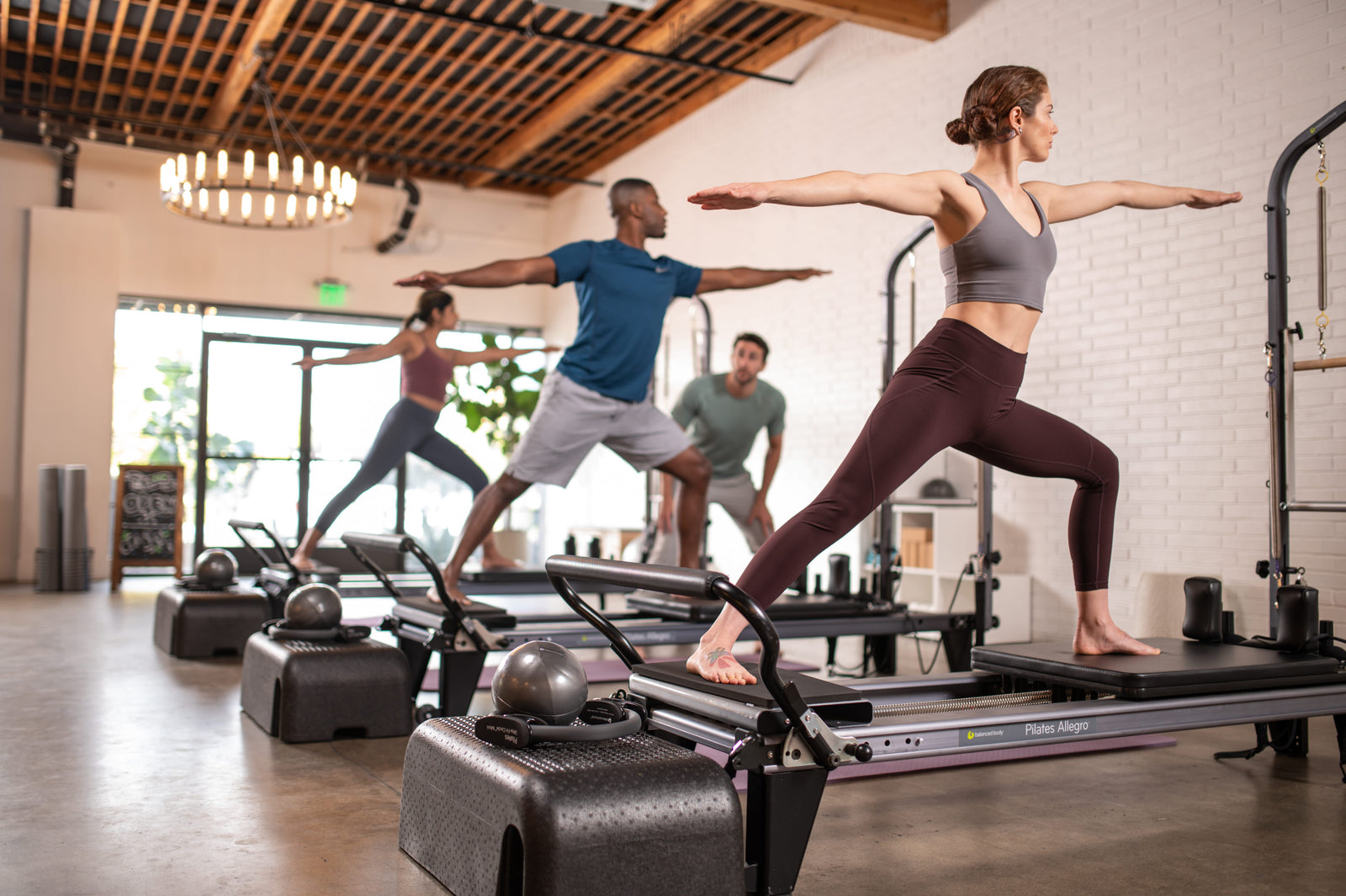
Joseph Pilates called his most famous training device the Universal Reformer. He developed this device with the aim of "reforming" the body through regular, conscious, and intelligent training, and considered it universally applicable for with a wide range of requirements—regardless of their performance level or starting point. When performed correctly and in compliance with appropriate safety guidelines, the Pilates method—especially when training on equipment such as the Universal Reformer—can have lasting positive effects on the body and mental well-being. One of its special features is the development of a specific form of strength: a strength that connects the deep stabilizing muscle structures with the global muscle systems while promoting body awareness and movement efficiency.
This integrated strength supports improved performance not only in a sporting context, but also in everyday functional movements. In addition, Pilates training promotes joint and muscle mobility, making the spine more flexible and providing better support through strengthened postural muscles. In the long term, regular Pilates practice helps to create the basis for , functional movement patterns. It can improve balance, train proprioception, support postural organization, and make a valuable contribution to injury prevention.
Pilates is increasingly recognized as a valuable complement to physical therapy, especially in the later stages of rehabilitation. Once patients have passed the acute or early recovery phase, there is often a need for more dynamic, integrative movement approaches that continue to promote strength, coordination, and control in a safe and structured manner. In this context, Pilates offers physical therapists a movement framework that can be individually adapted while following clear principles and a meaningful progression. for selected patients, Pilates-based exercises can support the transition from therapeutic intervention to more complex, functional movements and help bridge the gap between rehabilitation and long-term physical resilience.
When integrated thoughtfully, the Pilates method can be considered an additional tool in the therapeutic arsenal of physical therapists. It does not replace established physical therapy treatment approaches, but rather complements them as another element in the therapeutic repertoire and supports the transition from targeted therapeutic exercises to more coordinated, functional movements. With appropriate patient selection and sensible progression, Pilates-based principles and exercises can help physical therapists integrate isolated therapeutic work into more comprehensive, whole-body movement patterns. In this way, Pilates can accompany the transition from targeted rehabilitation to functional, task-oriented movements.
When used properly, the Pilates method can be a valuable addition to physical therapy by supporting general well-being and helping patients move more confidently and functionally in their everyday lives during the rehabilitation and recovery process. Recommended reading: Pilates: The Original Method
LaBriece Ochsner is a certified Comprehensive Pilates Teacher, Pilates Trainer, Pilates Continuing Education Instructor, International Pilates Speaker, and founder of LB Pilates & LB Guides Advanced Pilates Education. In her work, she supports people with different physical conditions and places particular emphasis on conscious, high-quality movement and teaching. In conversation with Gessica Paradiso from MEDiDOR, she explains what distinguishes Pilates as a method and why the structured movement concept can also be of interest for as a complementary approach.
Pilates is a structured training method and much more than a passing trend. It is a holistic exercise concept developed over a hundred years ago by Joseph H. Pilates, a native of Germany who emigrated to New York City in the 1920s. Joseph Pilates himself originally called his method Contrology and developed it on the basis of a clearly defined set of principles that differed significantly from other forms of training of his time – in particular through its focus on precision, control, and the integration of body and mind. Joseph Pilates understood movement not only as physical training, but also as a means of training perception, efficiency, and inner balance. According to his basic philosophy, Pilates should ideally be practiced regularly, in the best case daily, as a form of physical "maintenance." When applied consistently and consciously, the method aims to support general health and well-being, promote vitality, and contribute to long-term physical resilience and longevity.
Joseph Pilates called his most famous training device the Universal Reformer. He developed this device with the aim of "reforming" the body through regular, conscious, and intelligent training, and considered it universally applicable for with a wide range of requirements—regardless of their performance level or starting point. When performed correctly and in compliance with appropriate safety guidelines, the Pilates method—especially when training on equipment such as the Universal Reformer—can have lasting positive effects on the body and mental well-being. One of its special features is the development of a specific form of strength: a strength that connects the deep stabilizing muscle structures with the global muscle systems while promoting body awareness and movement efficiency.
This integrated strength supports improved performance not only in a sporting context, but also in everyday functional movements. In addition, Pilates training promotes joint and muscle mobility, making the spine more flexible and providing better support through strengthened postural muscles. In the long term, regular Pilates practice helps to create the basis for , functional movement patterns. It can improve balance, train proprioception, support postural organization, and make a valuable contribution to injury prevention.
Pilates is increasingly recognized as a valuable complement to physical therapy, especially in the later stages of rehabilitation. Once patients have passed the acute or early recovery phase, there is often a need for more dynamic, integrative movement approaches that continue to promote strength, coordination, and control in a safe and structured manner. In this context, Pilates offers physical therapists a movement framework that can be individually adapted while following clear principles and a meaningful progression. for selected patients, Pilates-based exercises can support the transition from therapeutic intervention to more complex, functional movements and help bridge the gap between rehabilitation and long-term physical resilience.
When integrated thoughtfully, the Pilates method can be considered an additional tool in the therapeutic arsenal of physical therapists. It does not replace established physical therapy treatment approaches, but rather complements them as another element in the therapeutic repertoire and supports the transition from targeted therapeutic exercises to more coordinated, functional movements. With appropriate patient selection and sensible progression, Pilates-based principles and exercises can help physical therapists integrate isolated therapeutic work into more comprehensive, whole-body movement patterns. In this way, Pilates can accompany the transition from targeted rehabilitation to functional, task-oriented movements.
When used properly, the Pilates method can be a valuable addition to physical therapy by supporting general well-being and helping patients move more confidently and functionally in their everyday lives during the rehabilitation and recovery process. Recommended reading: Pilates: The Original Method

LaBriece Ochsner is a certified Comprehensive Pilates Teacher, Pilates Trainer, Pilates Continuing Education Instructor, International Pilates Speaker, and founder of LB Pilates & LB Guides Advanced Pilates Education.
LaBriece Ochsner is a certified Comprehensive Pilates Teacher, Pilates Trainer, Pilates Continuing Education Instructor, International Pilates Speaker, and founder of LB Pilates & LB Guides Advanced Pilates Education.